









Hello to all readers!
Welcome to Save-TheBlues - A Marine life conservation blog!
You will learn that how humans' activities today harm the world and the ocean, why oceans are important to humans and how are we going to encourage more people to stop harming the marine lives. You can click on the content you want to see in the sidebar, under "Contents". All the information are categorized under 4 categories :
- Importance of the oceans and marine lives
- Facts of some marine animals
- What harms the oceans and marine lives
- Conserve the marine lives!
You can also help by spreading this message to people! You can put the animation into your blog or your webpage. The animations can be found under "How can you help?" in the sidebar.
You can find the meaning of difficult words that appear in the content at the sidebar, under "Dictionary"! Put your mouse over the word to find out what it means!
Saving the oceans makes a better world for the marine lives, as well as humans. Do you want to see the marine lives dying and the gorgeous oceans getting polluted? Spread the message around now!
*Do note that some of the dates of the posts were changed in order to arrange the posts in order.

A Visit to the Underwater World!
We went to Underwater World in Sentosa on Thursday (4th Sept '08) to learn more about marine lives and marine conservation efforts done by the Underwater World!
* Because there are too many images, I have put them as a slideshow to reduce the loading time
This trip gave us a unique chance to touch the marine creatures which could enhance our interest in marine creatures and conserving marine lives. The environment there is nice for the animals living there, and also they have put some notices to let us know more about the marine creatures there! We were fascinated by the interesting facts and creatures we have never seen it before! It was a fruitful trip which gave us more interest in learning to save the marine lives, so that such a gorgeous underwater world would not be destroyed.
Labels: The Underwater World trip
THE FASCINATING CHEK JAWA !
Dec 2001 - Reclamation3 at Chek Jawa has been deferred. A visitor management system by NParks is functioning with the help of volunteer guides.
Pictorial Tour of Chek Jawa http://chimck.tripod.com/chekjawa/002.html
What's so special about Chek Jawa?
The kind of feeling that Chek Jawa can be described as one that calms
every heart that has been to there. The several varies of ecosystems4 can be seen in
one small area. The living things there are rarely to be found in
are also known to be disappearing elsewhere in the world. 

Trees and plants covers Chek Jawa and is also home & resource
to the animals living there. There are some rare birds that u might spot that can make your day, for example, the Oriental pied-horn bill and the Red junglefowl. Delek air tree is known to be one of the most outstanding trees that u might spot. Maybe, just by luck, you may be able to spot the star “Priscilla” a tame wild boar that may emerge from the forest and greet you.
 Mangroves
There are a lot fascinating plants and animals at the mangroves of Chek Jawa. Mangrove trees have its own interesting features and are shaped artistically. They are adapted to be covered in seawater at high tides in soft mud. Mudskippers are very likely to be found at the mangroves. Rocky shore
Chek Jawa are known for its natural rocky shore, gravel5 beach and other fascinating rock formations. During the period of low tide, we are able to see some interesting living creatures there including barnacles, crabs and even fierce shell-drilling snails. As you lift up the rocks, you may even find more amazing creatures like cowries, sea stars and fast flat crabs.

The shore teems with tiny crabs which goes about their extravagant act at low tides if undisturbed. The sand is like the backbone of Chek Jawa that provides home to all the creatures there. The well-known sea star is a hit amongst the visitors. You can also spot shorebirds that flew from as far as

Well known for its calm and shallow feature. It is lushed with seagrass and seaweeds formed behind the sand bar. You might be stunned by the carpet of anemones which are colourful and bigger than your face. Sometimes, the seagrass can be dotted with colourful sea cucumbers. For a lucky one, you may also encounter sea hares, squids or even mantis shrimp.

Known to be the most fragile in Chek Jawa. They are rarely exposed even at low tides. It shelters the living creatures in sea which includes sponges, delicate fan worms and even living corals. Octopuses, seahorses, nudibranchs and colourful flatworms are some of the other amazing residents of this special part of Chek Jawa.


Sand dollar , Mudskipper, Dove snails, Sand star


Sea cucumber, Seahorse, Flatworm , Octopus, Colourful sponges
Sources :
Chek Jawa Website
http://www.wildsingapore.com/chekjawa/text/a001.htm
Labels: The fascinating Chek Jawa
Importance of oceans
Oceans are important to humans because they give us oxygen, rain and food. Without the oceans, humans would not be able to survive.
The ocean regulates1 temperature and shape the weather around the world. Global warming2 caused the oceans to warm. Warming of the oceans speed up water cycle, which have caused much more extreme weather such as droughts and floods.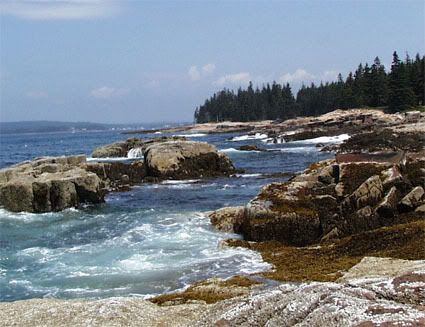
Sources :
· Video - Youtube
· Image - iWebQuest

Labels: Importance, Ocean
Importance of corals and coral reefs
· The corals provide protection and shelter for many different species of fish.
· Coral are very important in controlling how much carbon dioxide is in the ocean water. More carbon dioxide will cause the temperature of water to increase.
· Corals can also be made into medicines to cure diseases such as cancers and AIDS.
· Coral skeletons can be used as bone substitutes in reconstructive bone surgery, which able to heal bone fractures effectively.
· Without coral reefs, these fish are left homeless with nowhere to live and no where to lay their eggs.
· Coral reefs are able to protect the shorelines from erosion and storm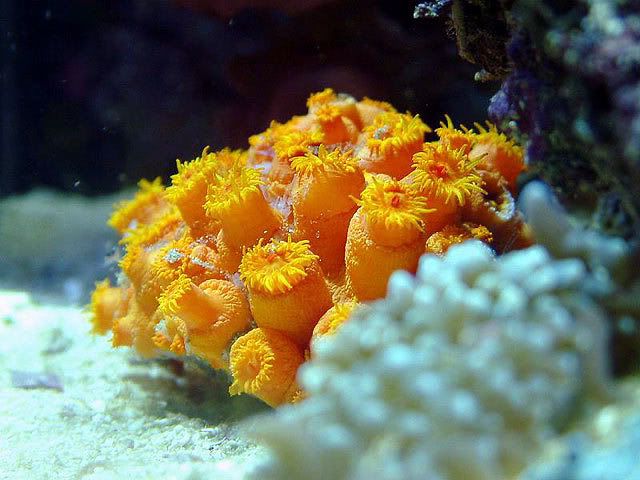
Sources:
· info - OceanWorld, Youtube, Highbeam
· picture - coral

Labels: Coral and coral reefs, Importance
Why are marine plants important for marine lives?
Marine plants are important for marine lives because they provide food, oxygen and shelter.
Food
There are many marine plants in the ocean supporting like but the most important of them all is phytoplankton6. Phytoplankton are alone responsible for 50% of the oxygen in the atmosphere and the majority of the food in the ocean.
Plankton7 feeds on phytoplankton and someof the marine life in the ocean, from tiny fish to giant shark and whales, feeds on Plankton.
The annual bloom of the phytoplankton determines the breeding cycles for most marine life. Fish, mammals and crustacean travel vast distances across the oceans search for the blooms.
Without phytoplankton, most of their inhabitants will starve, and there will not be a large population of marine lives living in the ocean.
Oxygen
The plant life in the oceans releases huge amounts of oxygen into the water, allowing marine life to breath.
It is beacuase if the lack of plant life in the great ocean depths (they can't photosynthesize without sunlight) that marine life there is so sparse.
Shelter
The ocean is a vast empty space. There isn't much to hide behind to avoid predators but floating seaweed or other plant life provides a great escape for small fish and crustaceons that would otherwise be quickly eaten up.
The kelp forest of the oceans are a "safe harbour" for marine life. Kelp can grow to be several metres tall and houses many fish, crustacean and even some mammals in its leaves and stems

^ Example of a crustacean
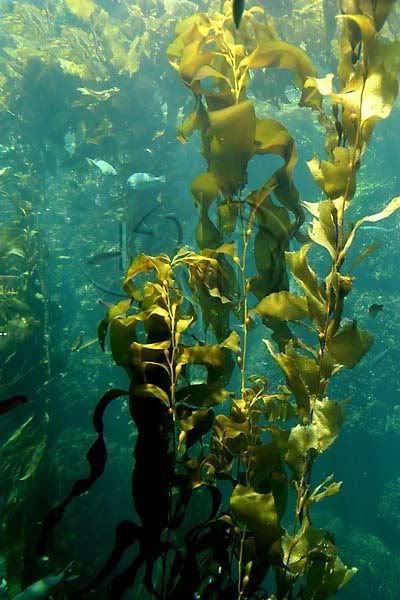
^ Kelp
Source :
· info - WikiAnswers
· picture - Kelp, Wikipedia


Labels: Importance, Marine plants
Dolphins!
Do you know...
- Bottlenose dolphins have 80 to 100 teeth, but they do not chew their food.
- Dolphin’s squeaks are not made with their mouth, as they don't have vocal cords; all sounds come through the dolphin's blowhole!
- Dolphin uses its lower jaw and teeth as an antenna!
- Echolocation allow dolphin to be able to ‘see’.
- A dolphin can tell which direction a scuba diver is facing from a distance of one football field away!
- The average lifespan of a bottlenose dolphin is roughly 25 to 30 years.
- The oldest dolphin born in human care is 55 years old now!
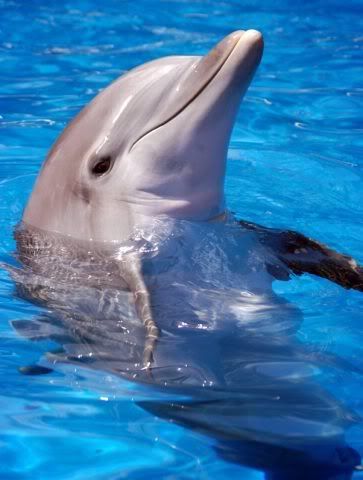
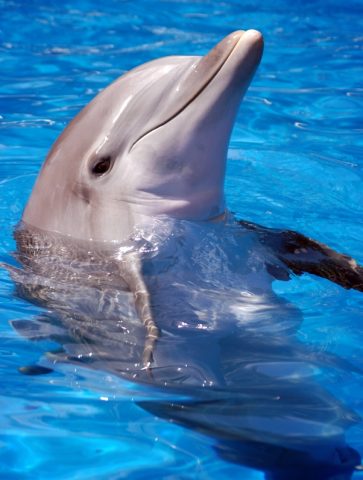
^ Bottlenose Dolphin
More about Dolphins
The majority of small tooth whales are called dolphins. All have a beak like snout and sharp, conical teeth. Dolphin fish , neither a dolphin nor a porpoise, it is a sport fish related to the mackerels.
On an average term, dolphin species grows about 6ft in it lngth.
For the males, it is 4 to 8 inches longer than females. Bottle-nose dolphin,
known as one of the largest dolphin, can grow into a 9ft beauty in length and weighs about 440 lbs. Buffeo, also known as the smallest species, originated in
The Amazon River, rarely grows over 3.9ft in length. It is very small compared to the Bottlenose dolphins.
Dolphin consume living things and are considered as predators, except for trained dolphins. Their primary food is fish, herring, mackerel and sardines.
The friendly creature consumes about 66 lb a day.
Also dolphins do work well with human and are ready to be trained anytime.
The well known performers in aquariums are the Bottlenose dolphins as
they are much more capable of impressive tricks and are able to mimic sounds
of a few human words
Source :
· info - DolphinsPlus, The Dolphin Place
· picture - HiTech
Turtles & Tortoises
Turtles’ existence have been on earth for 200 million years. They evolved8 before mammals, birds, crocodiles, snakes, and even lizards. Species like American Box Turtle are able to live for more than a hundred years of age. Turtles are able to live in any condition as long as it is warm enough to allow them to complete their breeding process.
The top domed part of a turtle's shell is called the carapace while the bottom underlying part is called the plastron.
The shell of a turtle is made up of 60 different bones all connected together.
The edge of the shell are covered with scutes that are derivatives of skin and enhances any additional strength and protection
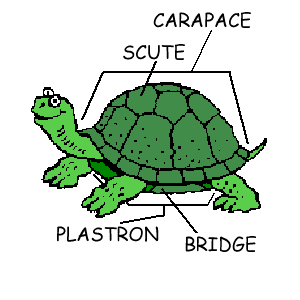
^ Names of the parts on turtle shell
Most turtle species consist of five toes on each limb with a few exceptions, including the American Box Turtle of the carolina species that only has four toes, and in some cases, only three.
Turtles have good eyesight and an excellent sense of smell. Hearing and sense of touch are both good and even the shell also do contains nerve endings.
Some aquatic turtles can absorb oxygen through the skin on their neck and cloacal areas allowing them to remain submerged underwater for extended periods of time and enabling them to hibernate underwater.
Turtles are one of the oldest and most primitive groups of reptiles and have outlived many other species. One can only wonder if their unique shell is responsible for their success.
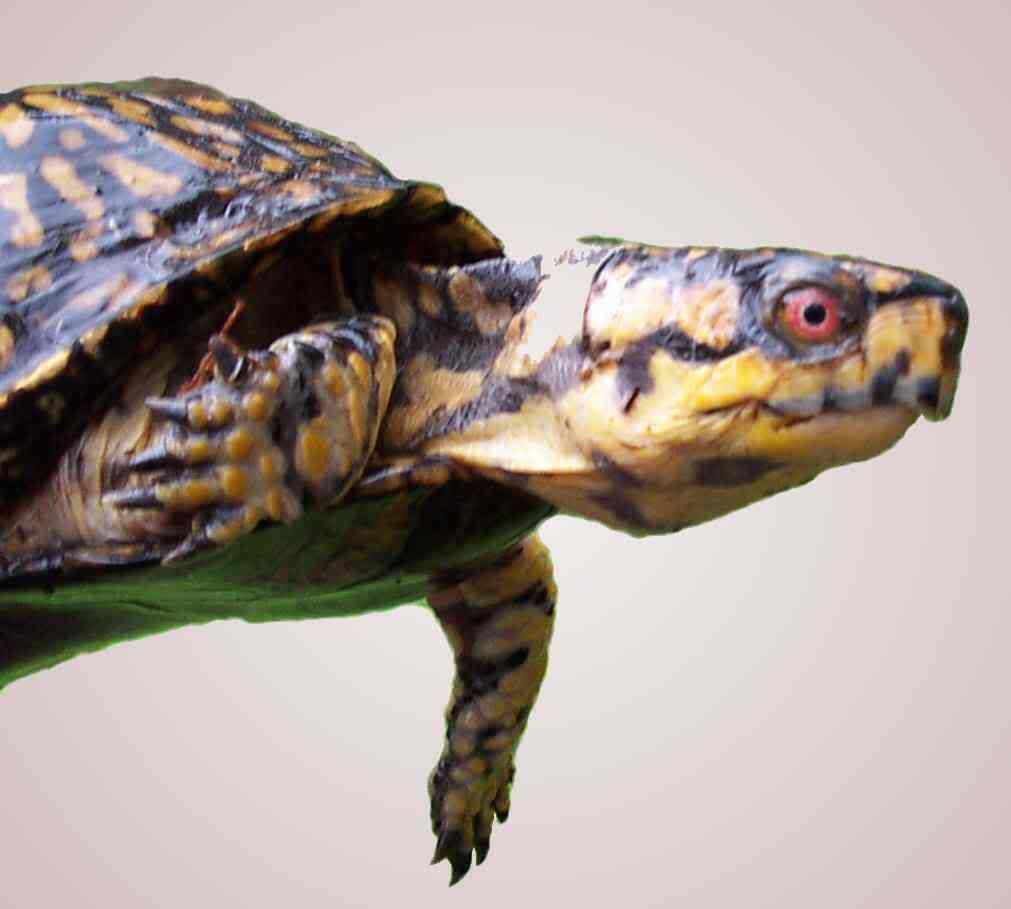
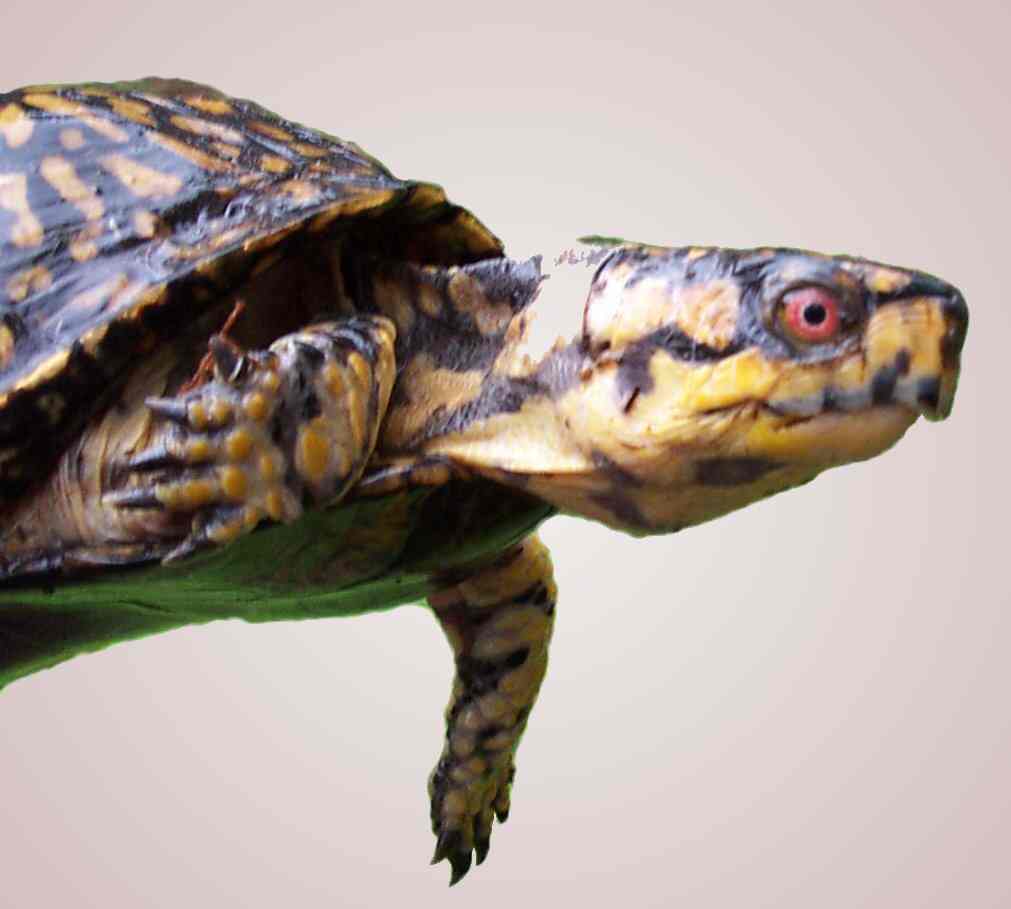
^ Ameican Box Turtle
Sources :
· info - Discovery
· image - Name of parts of turtle shell, TurtleRescue

JELLYFISH
No bones. No brains. But what a sting!
The sting of some "jellies," such as sea nettles, can be deadly. Others are harmless to humans. They range in size from about 1 inch (2 1/2 centimeters) to 200 feet (61 meters) long. They have been drifting through the world's oceans for more than over 650 million years.
Jellyfish are not fish at all. They are invertebrates, relatives of corals and sea anemones.
A jellyfish has no head, brain, heart, eyes nor ears. It has no bones, either. To capture prey for food, jellies have a net of tentacles that contain poisonous, stinging cells. When the tentacles brush against prey (or, let's say, a person's leg), thousands of tiny stinging cells explode, launching barbed stingers and poison into the victim.
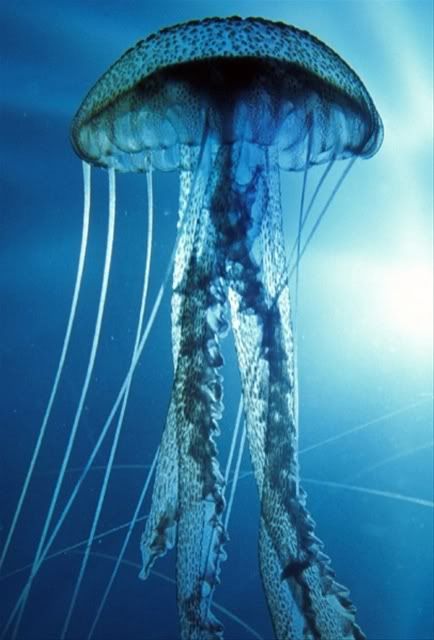
LOOKOUT!
1. Do take note warning signs of jellyfish.
2. Be careful when you are around jellyfishes that has been washed up on the sand. Some can still sting if their tentacles are wet. Tentacles that were torn off itself can sting, too.
3. If you are stung, wash the wound with vinegar or rubbing alcohol. Or sprinkle meat tenderizer or put a baking soda and water paste on the sting. Don't rinse with water, which could release more poison.
4. Lifeguards usually give first aid for stings. See a doctor if you have an allergic reaction.
Sources :
· info - National Geographic
· images - Jellyfish

Labels: Facts, Jellyfishes
Facts of coral reefs :
- They are structures produced by living organisms found in marine with little nutrients as high nutrient level can harm the reef by the growth of algae.
- A coral reef is made up of thin layers of calcium carbonate (limestone) secreted over thousands of years by billions of tiny soft bodied animals called coral polyps.
- Coral reefs are the world's most diverse marine ecosystems and are home to twenty-five percent of known marine species, including 4,000 species of fish, 700 species of coral and thousands of other plants and animals.
- Coral reefs have been existed for over 400 million years.
- The largest coral reef is the Great Barrier Reef, which stretches along the northeast coast of Australia, from the northern tip of Queensland, to just north of Bundaberg. At 2,300km long, it is the largest natural feature on Earth.
- Coral reefs occupy less than one quarter of one percent of the Earth's marine environment, yet they support more than a quarter of all known fish species. As well as supporting huge tourist industries, coral reefs protect shorelines from damages caused by erosion and storm
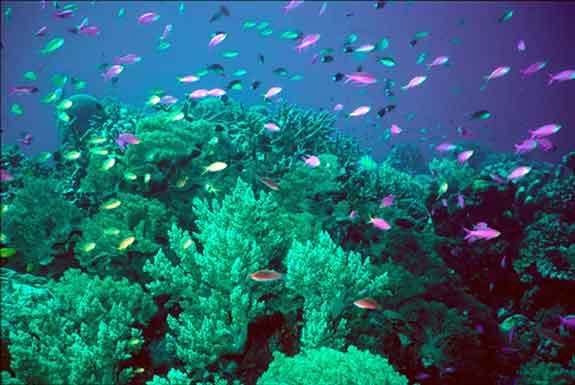
^ Coral reef
Sources :
info - ReefRelief
picture - http://oceanworld.tamu.edu/students/coral/images/coral_reef_1.jpg

Labels: Corals and coral reefs, Facts
STARFISH
Starfish are known as sea stars and not considered as fish despite their name.
They are able to be found in the deep blue seas and shallow waters.
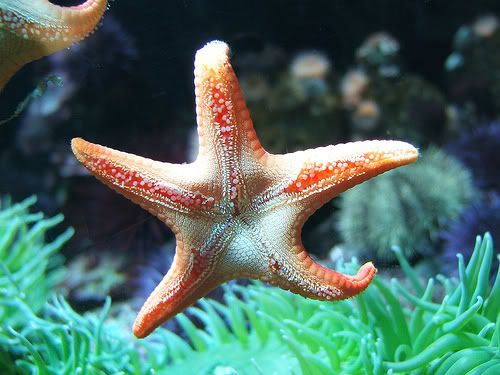
The five arms of the star fish are its feature. It often appeared spiky on surface
A starfish has two stomachs which make them so special. One called the cardiac stomach which
helps the starfish to engulf food outside its body and then comeback to the pyloric stomach.
The tube feet play an important role in helping the starfish to procure its food. They are used to open up the oysters or clams. Then the stomach is extended into the shell to pull the food inside.
Have you ever tried locating the mouth of a starfish? It is located on the ventral surface, underneath the upper surface. There is around 1800 number of species of starfish.
Everyone can easily find starfish in all oceans around the world. Mostly found in the
Tropical area of the Indo-Pacific. They also live in the coral reefs and sea beds.
Starfish can never be found in fresh water.
The starfish have microscopic eyes at the end of each arm; this enables the starfish to view movement and differentiate between light and dark.
Most starfish have a spiky surface as a means of protection. The crown-of-thorns starfish is known for its thorny spines that are present all over the body.
^ Crown Of Thorn starfish
There are many patterns can be seen on a starfish! Most starfish have bright colours and stripes.
If a starfish loses its arm, it is capable of producing another!
Sources :
· info - Buzzle
· video - Youtube
· image - CuriousAnimals

Pollutions affect the Earth, and water pollution affects the most on the oceans!
So what causes the water pollution?
^ Water pollution
Oil spills:
Oil in the oceans block the oxygen from getting into the water, causing suffocation to the marine plants and animals. Birds can lose flight and insulating abilities when their feathers came contact with the oil spills in the ocean.
The marine animals could also affected by feeding on the filter feeders such as oysters, shrimps and some fishes. The filter feeders may quickly accumulate toxins in themselves and kill the animals that feed on them.
Coastal Erosion:
Coastal erosion is a natural process consisting in the detachment of soil particles by water under the impact of raindrops and runoff9, followed by the transport and redeposit of the particles concerned.
Coastal erosion can have negative effects on water quality and cause harm towards the reefs. The erosion of dirt or artificial filled coastlines release fine sediments to the nearshore waters. Furthermore, the significant increase in drainage passages for recent developments and concrete channelization for flood protection have both had critical impacts on near-shore water quality and sediment loads.
Littering:
Disposing of non-biodegradable10 items such as plastics can pollute the ocean. Burning of plastics will release carbon dioxide and other greenhouse gases, which increases the temperature of the oceans. Increase in the temperature can harm the marine lives. The coral bleaching are caused by the increase of the ocean temperature and salinity. The algae give the corals food and colour. Without the algae, the corals lose its colour and food source, therefore it will die. Once the corals die, the fishes will have no food and shelter for it to live and reproduce.
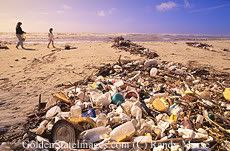
^ Beach litter
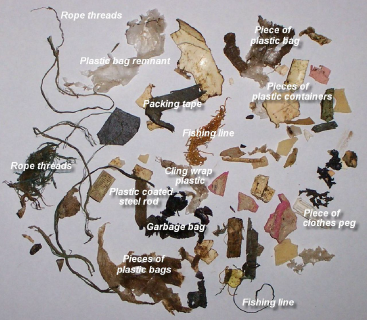
^ Items removed from turtle's stomach
Plastics can also cause marine animals such as sea turtles, to choke and die. The marine animals may thought the plastic is their prey and went to eat it. Plastics can also cause starvation because they clog the marine animals' digestive system or by filling their stomach, giving them a false sense of fullness.
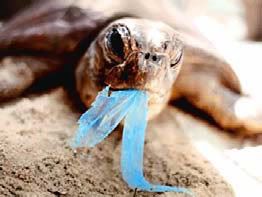
^ Turtle eating plastic
Toxic wastes:
Toxic waste is the most harmful form of pollution to marine creatures and human. The industries release those toxic wastes produced from burning metals and oil into the oceans. The filter feeders may accidentally consumed toxic waste, which can also passed on by food chain and cause other animals to die.
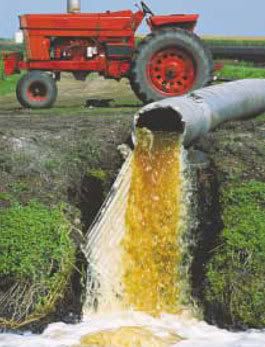
^ Toxic wastes released into the water
Sources :
· info - Coastal erosion, Wikipedia
· images - Toxic waste, Beach litter, Turtle eating plastic, Items removed from a turtle's stomach


· video - Youtube
Labels: Pollutions, What harms the ocean
Global Warming:
Global warming is caused by the carbon dioxide and other greenhouse gases that released from the industries. Those gases accumulate in the Earth's atmosphere and trap heat from the Sun. Then it radiate the heat to the Earth, hence rising the temperature of the Earth and also warming the oceans.
>> Industries
The industries are responsible for causing the global warming as they release the harmful gases into the air and trapped in the Earth's atmosphere. These gases were produced by burning fossil fuels, such as coal, oil and natural gas to power the machines to generate electricity. Burning of these fuels produces carbon dioxide, which increases the rate of global warming.
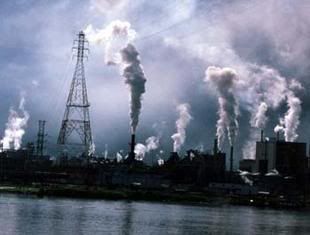
>> Deforestation
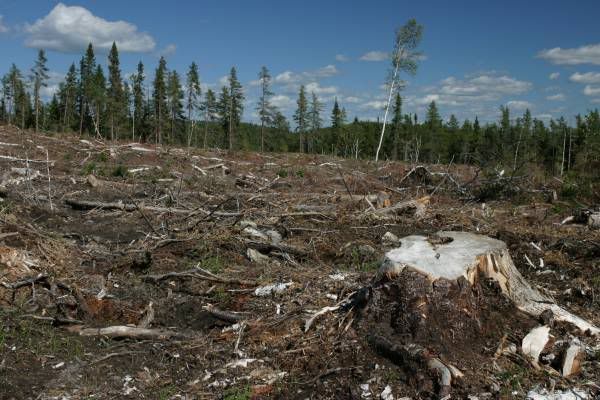
Forests are cut down to get that piece of land for human activites, such as :
· Build houses and villages.
· Grow crops
· Damming rivers to prevent floods, store water for irrigation and generate electricity.
· Extracting minerals from the ground, and processing and manufacturing them into products.
· Constructing road and rail networkds across land to allow people to move themselves and goods from place to place.
· Manufacture papers and furnitures
It improved the quality of life for humans, but this can cause greater harm to the Earth, especially the oceans
Lesser trees to reverse the rate of global warming, therefore it reduces the quality of the air for living things to breathe. It also affects the amount and quality of the water.
In order to clear land, incineration and burning of forest plants are needed , which releases carbon dioxide that also ocntributes to global warming.
Deforestation also causes flooding, erosion and landslides due to reduction of soil cohesion
Sources :
· info - Wikipedia
· images - Deforestation, Industrial pollution


Labels: Global warming, What harms the ocean
What is OverFishing?
Many people define Overfishing in various ways. However, everything link to just one simple point ; Too much fish are being caught and causes degradation to the system. Overfishing is known to be a non-sustainable use of the oceans,
Below are a few definitions in use by organisations and governments.
#1-The practice of commercial and non-commercial fishing which depletes a fishery by catching so many adult fish that not enough remain to breed and replenish the population. Overfishing exceeds the carrying capacity of a fishery.
#2-Catching too many fish; fished so much that the fish cannot sustain their population. The fish eventually get fewer and fewer, until finally there are none to catch.
#3-Fishing with a sufficiently high intensity to reduce the breeding stock levels to such an extent that they will no longer suppport a sufficient quantity of fish for sport or commercial harvest.
What is causing overfishing
All over the world, the fished that are caught are two to three times as large as needed to take for the present day which also include other marine species. On a global scale, we are able to cover at least four Earth-like planet with the fish capacity we have.

Many fishing methods are unstainable in their very own ways which have a large impact on our marine ecosystems. Many non-target species are being destroyed caused by the gears and fishing practices made by human which include Bycatch / discards and bottom trawling11.
On top of the overcapacity many fishing methods are unsustainable in their own way. These methods have a large impact on the basic functioning of our marine ecosystems. These unselective fishing practices and gear cause tremendous destruction on non target species. Bycatch / discards and bottom trawling destruction are two examples of this.
Sources :
· info - OverFishing
· image - Greenpeace
Labels: Overfishing, What harms the marine lives
>> Other factor that harms marine lives.
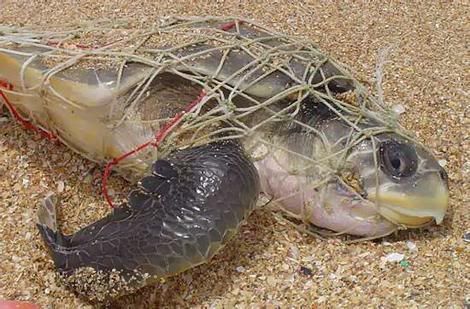
Ghost nets are fishing nets that are left or lost in the ocean by the fishermen can endanger the marine animals. Animals such as fish, sea turtles, sharks, seabirds and dolphins can be entangled by the net. Their movement is restricted and caused starvation, infection and also suffocation for animals that need to return to the surface to breathe.
^ A dead turtle entangled in a ghost net
^ Ghost net kills a giant lobster
Shark Finning
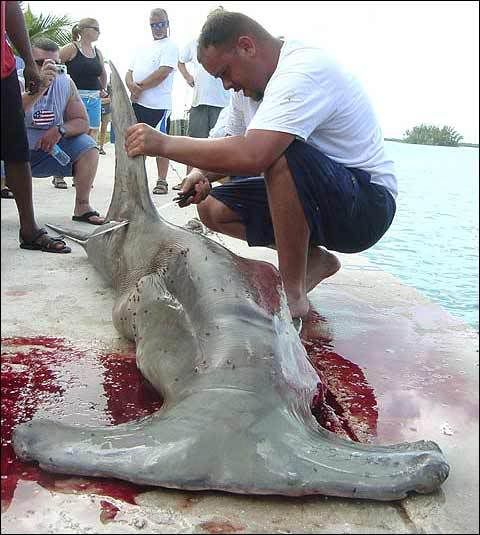
As shark fins worth more, most fishermen went to cut fins from a living sharks. They then throw the still-living sharks back to the ocean since shark meat worth much less and to make room on board for more valuble fins. The finless sharks were unable to move and causes them to die of suffocation or get preyed by other sharks or animals.
^ Shark finning
Sources:
· info - Wikipedia, Wikipedia - shark fin
· images - Ghost net, Shark finning.


· video - Youtube
Labels: Ghost net, Shark Finning, What harms the marine lives
So, we have to conserve marine lives to save the marine animals from getting harmed!
Marine Conservation is to aim for the better for the ecosystems in oceans and seas. Not only does it protect but it also reduces the damage caused by humans while, also, restoring damaged marine ecosystems.
Ways to reduce global warming :
- Large-scale planting of trees to help absorb carbon dioxide from the atmosphere
Trees abosrbs carbon dioxide from the atmosphere and stores carbon, which cools the Earth down and reduces Global warming. Trees emit clean oxygen which purifies the air. They also provide wood, drinking water and habitat for animals.

^ Plant more trees to save the Earth!
- Encouraging farmers to use more natural fertilisers on their land instead of nitrogen-based ones
Usage or storage of some nitrogen fertilizer in some weather or soil can caused greenhouse gas Nitrous Oxide (N2O) to be released. Ammonia gas (NH3) may also released by using inorganic fertilzers. Nitrous oxide in the atmosphere can produce acid rain which can change the pH value of the ocean and cause other damages such as corroding buildings and kill the trees.

- Build barriers along low-lying sections of coasts to prevent storm waves penetrating inland.
- Reduce and recycle the usage of plastics and un-biodegradable items.

- Use public transport, walking or cycling instead of usual cars. This can reduce carbon dioxide emissions from motor vehicles.
- Build more hydro-powered industries and wind turbines to generate electricity in order to reduce carbon dioxide emissions.


Sources:
· info - Tree-planting, Wikipedia
· images - Plant a tree, Acid rain, Recycle plastics, Wind turbine, Hydroelectricity

Labels: Marine conservation, Reduce global warming
There are 8 ways we can help the marine lives too!
1 We can encourage people to use electricity more efficiently to reduce the demand of electricity. This can save money, save the marine and save the world!
> Switch off unused electrical appliances when you leave the house
> Set the temperature for your air-conditioner at 25°C
> Switch off lights and fans when they are not in use.
2 We can also pick up rubbish along the beach! These rubbish will dirty the water. The oceans belong to all of us, keep them clean at all times!
3 If you are going to dive, do not touch the corals! The corals can be easily damaged. Diving with responsibility helps to save the corals as well as the marine lives.

4 Conserving water reduces runoff and wastewater, therefore lesser pollution can be caused to the oceans!
Starting November 10, 2007 and ending February 20th, UNC Chapel Hill and NC State will be competing in a water conservation competition. Challenge yourself to use less water than State students!
Here are some tips for conserving water:
> Try to keep your shower time to less than 5 minutes
> Do not leave the tap on while you are soaping, shaving and brushing your teeth.
> While waiting for the bath water to be heated up, collect the bath water and reuse for watering plants.
> Do not leave water running while washing dishes.
> Fill the washing machine to capacity when doing laundry
> Wear clothes longer than normal to reduce the water used on laundry.

^ Every drop of water counts!
5 Recycle items such as aluminium cans and plastics. Aluminium cans and most plastics take over 50 years to be completely degraded in landfills.
6 Reduce consumption of seafood. Only 10% of the big-fish that once dominated the ocean remain today. If we don't limit fishing and seafood consumption now, there will be no more fish in the next 50 years!
7 Do not use those chemically enhanced pesticides and fertilizers. Even you maye live very far away from a coral reef ecosystem, these products will eventually end up in the watershed and may impact the waters that support coral.
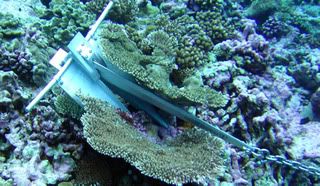
8 If you are boating, do not anchor on the reef! Please use the mooring buoy systems if they are available when you are going to boat near a coral reef.
^ Do not anchor on the reefs!
Sources :
· info - The Blue Marble (Secondary 2 Geography Textbook), Wikipedia, Conservation, Tips for conserving water
· images - Do not touch coral while diving, Every drop counts, Anchor on reefs


Labels: Marine conservation, What can you do to help

IYOR 2008
This year is the International Year of the Reef, that was celebrated worldwide to raise the awareness about the importance of coral reefs and threats that is present, and to motivate people to protect them.
IYOR was first started 10 years ago in 1997 and IYOR was back a decade later! Singapore will be celebrating IYOR with 50 countries around the world to celebrate our reefs! All the reef-loving groups in Singapore have come together to celebrate the amazing coral reefs we have in Singapore.
The purpose of IYOR is to:
· raise awareness about the ecological, economic, social and cultural value of coral reefs and associated ecosystems. Also to
· improve the understanding of the critical threats to coral reefs and generate both practical and innovative solutions to reduce these threats, and to
· carry out urgent action at all levels to carry out effective management strategies for conservation and sustainable use of these ecosystems
Source:
· info and image - IYOR '08 Singapore
Labels: Marine conservation, Purpose of IYOR
Other countries' effort to reduce global warming and conservation
Planting on roofs

^ Planting on roofs can help to cool the air around the house
Texas summers are unbearable, but now the Texas plants can help to reduce the heat!
Study suggested that if 30% percent of the roofs of the city are planted with plants, the temperature will decrease by 3°C in the summer. Green roofs provide cooler building, they also better energy efficiency and reduces storm water. As Texas live in a climate with feast or famine rain cycles, water capture systems are useful.
A green roof which houses blossoming cacti and blowing grasses can save 21% of your energy costs when compared to a black roof. Hospitals are also starting to plant on the roofs because it is proven that greenery can allow patients to recover faster.
Recycle the mooncake containers

^ Mooncake containers collection
As the mid-autumn festival is coming, many people will be buying the mooncakes to celebrate. A lot of mooncake containers will be disposed away.
In Hong Kong, five mooncake manufacturers have signed the one-year Voluntary Agreement on the Management of Mooncake Packaging with the Environment Protection Department to lessen the use of packaging materials on their products. They will follow the Environmental Guidelines on Mooncake Packaging Design by conserving resources through better design and production processes. Recyclable materials will be used and promote the recovery and recycling of used packaging.
They also encourage people to return used mooncake containers to the collection points in their housing estates, commercial buildings and shopping malls to recycle the containers.
Source:
· info - Planting on roofs, Recycle mooncake containers
· images - Planting on roofs, Mooncake packaging collections.
Labels: Efforts-1, Marine conservation
CONSERVATION EFFORTS IN SINGAPORE
Pulau Semakau

Pulau Semakau is another good example of the marine conservation efforts in Singapore. The ashes produced by Singapore's incineration plants were shipped in a covered barge and deposited to the Semakau Landfill every night. Semakau Landfill was ensured to be clean, free of smell and scenic, unlike the other landfills.
Coral nursery

Singapore's first coral nursery launched in Singapore in 30 July 2007 and was built in Pulau Semakau. With careful management, Singapore allowed such marine-rich ecological system to develop side-by-side with a landfill. Now Singapore can boast of having a coral nursery near a landfill, which is certainly an achievement that we can proud of.
Reduce consumption of shark fins
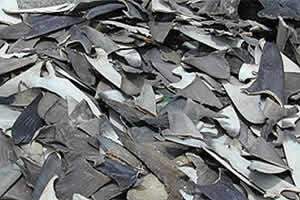
Resorts World at Sentosa (RWS) has put down shark fin menus to reduce sharkfin consumption. The Resort announced that shark fin will not be offered on the menus of banquets and restaurant throughout the Result. However, it will be available for wedding dinners as shark fins' soup was a traditional Asian delicacy. RWS is taking this step as they believed that the consumption of shark fin is currently not to be supported due to the drop of shark population and growing demand of shark fin.
Reduce consumption of coral fishes
(Taken from Shin Min Daily Newspaper)
+Xaph%27s(253).jpg)

Singapore World Wide Fund for nature (WWF) appeals to Singaporean to reduce consumption of reef fish such as Grouper (石斑鱼) and Humpheads (苏眉鱼)
WWF plans to cooperate with local restaurant and hotel, encourage them to provide lesser fish such as Humpheads and Grouper. Some fishermen uses destructive means to catch these fish, which will affect the growth coral reefs. WWF has cooperated with some local hotels and restaurants to provide those fish that supplied by those suppliers who got the fish without causing any harm to the oceans.
WWF plans to have 2 yr enrichment programme cooperating with restaurants and hotels, to provide lesser Humpheads and Groupers. WWF also encourages the government to take control fisheries, and warn those fishermen who uses destructive techniques to fish. This would cause negative impact on the marine lives and the reefs. These fish are encouraged to reduce consumption, in order to reduce the harm done to the ocean and marine lives.
Source :
· info - Pulau Semakau, Coral nursery in Singapore, Reduce consumption of shark fin, Reduce consumption of coral fish
· images - Pulau Semakau, Coral nursery, Shark Fins, Coral fish
Labels: Efforts-2, Marine conservation