








Monday, August 25, 2008
>> Other factor that harms marine lives.
Ghost nets are fishing nets that are left or lost in the ocean by the fishermen can endanger the marine animals. Animals such as fish, sea turtles, sharks, seabirds and dolphins can be entangled by the net. Their movement is restricted and caused starvation, infection and also suffocation for animals that need to return to the surface to breathe.
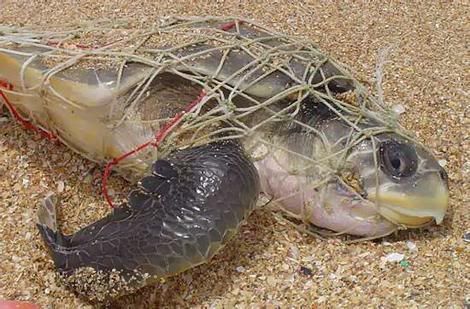
^ A dead turtle entangled in a ghost net
^ Ghost net kills a giant lobster
Shark Finning
As shark fins worth more, most fishermen went to cut fins from a living sharks. They then throw the still-living sharks back to the ocean since shark meat worth much less and to make room on board for more valuble fins. The finless sharks were unable to move and causes them to die of suffocation or get preyed by other sharks or animals.
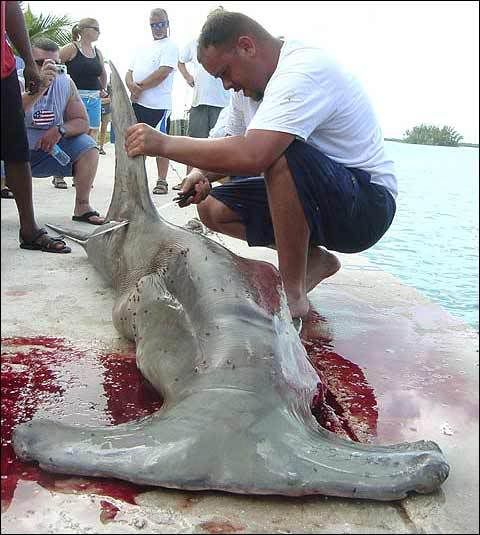
^ Shark finning
Sources:
· info - Wikipedia, Wikipedia - shark fin
· images - Ghost net, Shark finning.


· video - Youtube
Labels: Ghost net, Shark Finning, What harms the marine lives